EUR
EUR Canada
 Japan
Japan


Boom in 'ice ivory' trade of mammoth tusks presents new threat to elephants and environment – Phys.org

Sign in with
Forget Password?
Learn more
share this!
32
Tweet
Share
Email
October 13, 2023
by University of Portsmouth
This article has been reviewed according to Science X’s editorial process and policies. Editors have highlighted the following attributes while ensuring the content’s credibility:
fact-checked
trusted source
proofread
Conservationists fear a rise in the buying and selling of mammoth tusks, known as the “ice ivory” trade, poses a new threat to elephants.
A UK-wide ban on the sale of ivory came into force in 2018, following a University of Portsmouth led investigation into the British antiques trade of the material.
Earlier in 2022, it was announced the Ivory Act would be extended to protect five more endangered CITES-listed species, including the hippopotamus, walrus, narwhal, orca and sperm whale.
However, a new study has warned the sale of mammoth tusks is an unregulated aspect of the ivory trade that needs to be addressed. The species fall outside of the regulation of the Convention on International Trade in Endangered Species of Wild Fauna and Flora (CITES); a multi-government agreement set up to ensure the survival of animals and plant species.
The authors argue that while wooly mammoths became extinct more than 10,000 years ago, their lives and ultimate demise has much to teach us about how we conserve and protect remaining elephant populations.
With climate change warming the world, the permafrost preserving mammoths is melting and they are being uncovered across the Northern Hemisphere, the majority in Siberia.
Dr. Caroline Cox, lead researcher in the University of Portsmouth’s Ivory Project, said, “There’s evidence traders are trying to sustain the illegal ivory market with mammoth tusks, by intentionally mislabeling ice ivory as elephant ivory.
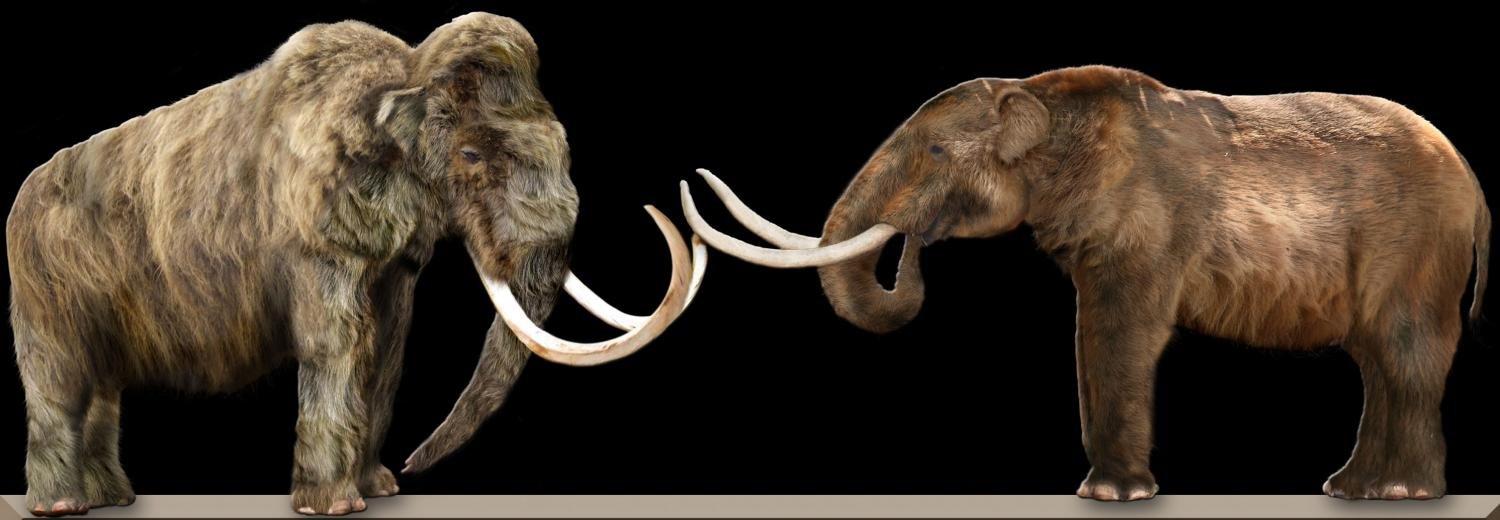
“Modern elephants and wooly mammoths share a common ancestor, so their tusks have close similarities.
“Instead of profiting from these new discoveries, we should be learning from them—how mammoths lived and how they died—to help protect their endangered relatives.”
Dr. Luke Hauser, co-investigator on the study, explained the link between mammoth and the modern elephant: “The first mammoths appeared in Africa around five million years ago, and radiated into at least 10 species; all originating from the same family of modern elephants, known as Elephantidae.
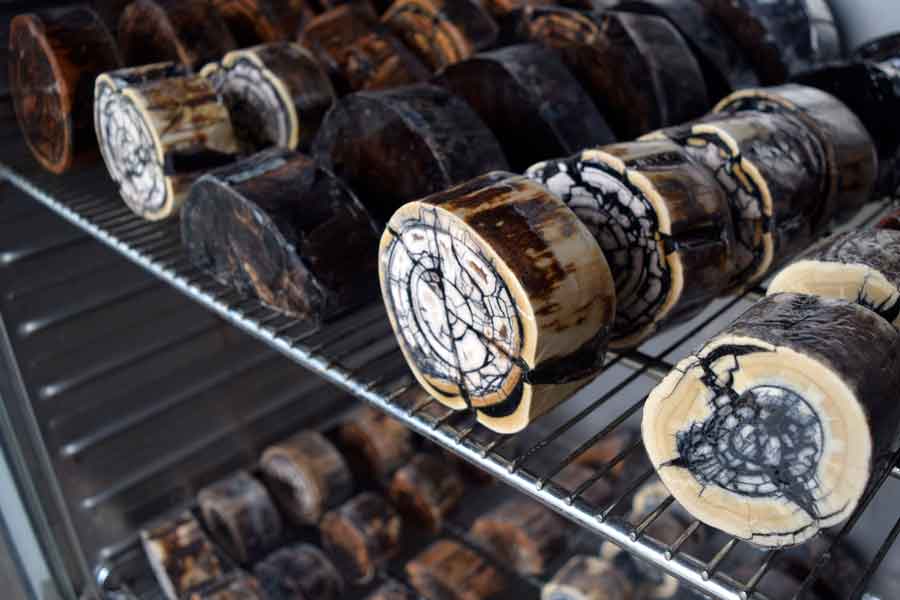
“Structurally, mammoth ivory is fundamentally identical to elephant ivory. Both have Schreger lines, which are distinct characteristics of the species.”
“One question we explored in this study was whether it was possible to identify which species a piece of ivory came from,” added Dr. Cox.
“The reason this may be important is when Israel petitioned for the wooly mammoth species to be added to the CITES list, it was very specific. We know the majority of the ivory coming out of Siberia is wooly mammoth, but because evolution is a slow process there would have been crossovers between their characteristics and their predecessors.
“So hypothetically, a trader could have a document claiming a tusk is from a steppe mammoth—when in fact it’s actually a wooly mammoth—and we wouldn’t be able to argue otherwise without an expensive and lengthy DNA test.”
In 2018 the UK Government introduced the Ivory Act—banning the sale of elephant ivory—following an investigation led by the University of Portsmouth’s Ivory Project.
Discover the latest in science, tech, and space with over 100,000 subscribers who rely on Phys.org for daily insights. Sign up for our free newsletter and get updates on breakthroughs, innovations, and research that matter—daily or weekly.
The project was launched in the House of Commons in November 2015 by Dr. Caroline Cox and Dr. Nicholas Pamment, and has since gained considerable attention and momentum. The aim of the project is to consider the role played by the UK’s antiques trade in the trade in ivory.
It is more than a decade since eBay announced its own complete, worldwide ban on ivory sales. An online post stated that the global ban would ‘protect buyers and sellers, as well as animals in danger of extinction.’
However, recent studies have shown that sellers of illegal wildlife products operate on the dark web, rather than more openly through online social media and auction platforms.
It’s estimated the illegal wildlife trade to be collectively worth between $15–22.5 billion a year, putting it on a par with the illegal arms trade, the illegal drugs trade and the trade in human trafficking.
Dr. Cox added, “While mammoth tusks continue to be in demand, particularly in the Far East, the Siberian tusk hunters of Yakutia recover only what the buyers want—the ivory. The remains of the mammoth are left behind and lost to science.
“This mining is dangerous, often illegal, and environmentally damaging. The law of the Russian Federation states that only mammoth tusks that have come to the surface, usually as a result of the permafrost melting, can be harvested.
“But in reality, most miners hurry this process along using high pressure hoses to blast the permafrost.”
Dr. Hauser added, “The industrial method of recovering mammoth tusks is adding to the risks that global climate change represents to living elephants and many other species. The permafrost locks away gigatonnes of greenhouse gases such as methane, so this accelerated loss is contributing to rising global temperatures.”
The paper, published in the Journal of International Wildlife Law and Policy, says the best and most effective way of tackling issues surrounding the ‘ice ivory’ trade is international cooperation from nations sharing resources and intelligence.
More information: Caroline Cox et al, Ice Ivory to White Gold: Links Between the Illegal Ivory Trade and the Trade in Geocultural Artifacts, Journal of International Wildlife Law & Policy (2023). DOI: 10.1080/13880292.2023.2217615
Provided by University of Portsmouth
Explore further
Facebook
Twitter
Email
Feedback to editors
12 hours ago
0
13 hours ago
0
14 hours ago
0
15 hours ago
0
17 hours ago
0
6 hours ago
6 hours ago
7 hours ago
7 hours ago
7 hours ago
8 hours ago
8 hours ago
8 hours ago
9 hours ago
9 hours ago
3 hours ago
Jun 5, 2025
Jun 4, 2025
Jun 3, 2025
May 24, 2025
May 18, 2025
More from Biology and Medical
Jan 4, 2019
Aug 12, 2019
Dec 20, 2017
Aug 11, 2020
Jan 12, 2018
Jan 4, 2021
11 hours ago
13 hours ago
13 hours ago
15 hours ago
14 hours ago
6 hours ago
This summary was automatically generated using LLM. Full disclaimer
Use this form if you have come across a typo, inaccuracy or would like to send an edit request for the content on this page. For general inquiries, please use our contact form. For general feedback, use the public comments section below (please adhere to guidelines).
Please select the most appropriate category to facilitate processing of your request
Thank you for taking time to provide your feedback to the editors.
Your feedback is important to us. However, we do not guarantee individual replies due to the high volume of messages.
Your email address is used only to let the recipient know who sent the email. Neither your address nor the recipient’s address will be used for any other purpose. The information you enter will appear in your e-mail message and is not retained by Phys.org in any form.
Get weekly and/or daily updates delivered to your inbox. You can unsubscribe at any time and we’ll never share your details to third parties.
More information Privacy policy
We keep our content available to everyone. Consider supporting Science X’s mission by getting a premium account.
Medical research advances and health news
The latest engineering, electronics and technology advances
The most comprehensive sci-tech news coverage on the web